Teachings
Yngliism — The Ancient Faith of the Slavic and Aryan Peoples
Core concepts, symbols, and foundations of the teachings of Yngliism.
General Overview
Origin of the Name
According to the teachings of the Old Believer–Ynglings, the name of the Ancient Faith of the Forebears—Yngliism—comes from the symbolic Da'Aryan word-image Ynglia. In the tradition's account, this Image was represented by a single symbol, the Tyraha, in Da'Aryan writing, and by the principal Ynglia Rune in Kh'Aryan writing.
Our Wise Ancestors understood Ynglia as the Divine Primordial Fire of Creation, in which diverse forms of Life arose throughout the Boundless Infinities—the many universes that came into being in the New Reality.
The Primordial Sacred Light of Ynglia, emanating from the One Creator and Maker, the Great Ra-M-Kha, also filled our blessed Midgard-Earth.
To express the name of their Faith, Old Believer–Ynglings combine the Ynglia Rune, representing the Divine Primordial Fire, with the sacred three-rune Image IZM, meaning “Truth of the Earthly World.” According to the tradition, this combination reveals the spiritual meaning of “Yngliism.”
Spiritual Worldview
At the heart of the Old Believer–Yngliing worldview is belief in the One Supreme Creator and Maker—Ra-M-Kha, the Primordial Source of the Great Life-Giving Sacred Fire.
Followers do not regard Yngliism as exclusively monotheistic or polytheistic. While recognizing the One Creator, they also honor the Luminous Gods associated with different aspects of Creation, spiritual life, and ancestral heritage.
A central teaching is the inseparable connection between human beings, the Divine World, Nature, and their ancestral lineage. Within this tradition, the Gods and Ancestors are sources of wisdom passed from one generation to the next.
The Circle of Gods
Different lineages of Old Believer–Ynglings traditionally honor their own Circle of Gods, comprising sixteen Divine Images according to the principle 12 + 3 + 1:
-
Twelve Luminous Ancestral Gods, forming the foundation of the cult of the Twelve Gods.
-
The Great Triglav, a triad of deities honored in various combinations.
-
The One Creator and Maker, Ra-M-Kha, the Primordial Source of the Divine Fire of Creation.
The tradition recognizes several forms of the Great Triglav: Svarog–Perun–Sventovit; Vyshen–Rod–Svarog; Rod–Lada–Svarog; Svarog–Perun–Dazhdbog; Veles–Perun–Dazhdbog; and others.
According to traditional descriptions, sacred places known as Kummirni were established near dwellings to honor the Native Gods. At the center stood a fire altar called a Dunya, surrounded by sixteen Kummirs—sacred representations of the deities most revered by that lineage.
Faith and Spiritual Traditions
Old Believer–Ynglings understand Yngliism as the Ancient Faith of the Forebears, founded on a spiritual bond between people, the Gods, their Ancestors, and the surrounding World.
According to the teachings, this bond was never broken and therefore does not need to be restored. Followers use this belief to distinguish Yngliism from contemporary religious systems and neopagan teachings.
In religious studies, however, Yngliism is classified as a modern religious movement associated with Slavic neopaganism. Its adherents define their Faith differently, emphasizing spiritual continuity with ancestral heritage.
The Old Russian Yngliist Church of Orthodox Old Believer–Ynglings is described here as a spiritual community bringing together people who share the traditions of the Ancient Faith of the Forebears, honor ancestral heritage, and seek to preserve spiritual knowledge, customs, and cultural values.
Respect for the spiritual heritage, distinctive cultures, and traditions of different peoples is an important principle of the understanding of Yngliism presented here. Every person has the right to choose their own spiritual path, explore ancient beliefs, and preserve ancestral heritage regardless of origin or skin color.
Honoring the Gods and Ancestors, preserving ancestral memory, and striving for spiritual growth hold a special place in the Yngliing worldview.
Why We Call Ourselves Old Believer–Ynglings
In everyday life we call ourselves Old Believer–Ynglings or Orthodox Slavs, giving these names the following spiritual meanings.
1. We are Old Believers.
We follow the Ancient Faith of the Forebears, honor the heritage of our ancestral lineages, and preserve spiritual knowledge, customs, and traditions handed down through generations.
2. We are Ynglings.
Our tradition also uses the name Ynglyane. We preserve Ynglia—the Sacred Divine Fire of our Forebears—and kindle it before the Images and Kummirs of the Luminous Gods and Wise Ancestors.
3. We are Orthodox.
For we glorify PRAV and SLAV. In this tradition, Prav is the World of our Luminous Gods, while Slav is the Luminous World inhabited by our Great and Wise Ancestors. Through honoring them, we express our spiritual connection with the Divine World and the heritage of our lineages. Here “Orthodox” reflects this traditional interpretation rather than necessarily referring to Eastern Orthodox Christianity.
4. We are Slavs.
For we praise the Ancient Luminous Gods and Wise Ancestors with sincere hearts, honor their wisdom, and seek to preserve their spiritual heritage for future generations.
External Signs of Faith
The Sacred Sign of Perun
According to the sacred writings, legends, and spiritual traditions of the Old Believer–Ynglings, we make the Sacred Sign, also called the Sign of the God Perun or Perunitsa—the symbol of Divine Lightning—during invocations to the Gods, the singing of sacred hymns, and entry into Kapishchas and Sanctuaries.
To make this sign, the tips of three fingers of the right hand—the thumb, ring finger, and little finger—are joined in honor of the Great Triglav of the World of Yav: Svarog, Perun, and Sventovit, representing Conscience, Freedom (Will), and Light.
The remaining two fingers—the index and middle fingers—are held together and extended, symbolizing the Heavenly Rod and Lada the Mother Goddess.
These two extended fingers are then placed in sequence upon the forehead, the left eye, the right eye, and finally the lips.
Each movement has a sacred meaning:
-
Forehead — sanctifying the mind as it comprehends the Wisdom of the Gods and Ancestors.
-
Eyes — sanctifying sight so that it may perceive the true Creation of the Gods and Ancestors.
-
Lips — sanctifying speech, so that words of Wisdom may be spoken and the mouth kept free from blasphemy.
By making the Sacred Sign, we reproduce the symbol of Perun's Sacred Lightning, which, according to our Faith, sanctified the lives of the Ancestors and continues to bless our daily deeds.
Bowing the head during invocations and hymns expresses reverence for the Native Gods and Wise Ancestors, and gratitude for their protection and help in good works.
The Sign of Glory
When praising the Luminous Gods and the Ancestors of our lineages, we perform the Sign of Glory.
This sacred gesture is used in Kapishchas, Sanctuaries, and Kummirni, beside ancient Kummirs and altars, and during the celebration of sacred days in holy groves, oak woods, and along rivers and lakes.
To make the Sign of Glory, the open right palm is first placed over the heart. The straightened arm is then raised toward the Heavens of Svarog (Fig. 1), while proclaiming:
“Glory to Our Gods and Ancestors!”
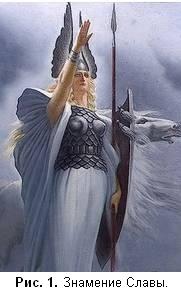
Fig. 1. The Sign of Glory.
Personal and Ancestral Amulets
In daily life, Orthodox Old Believer–Ynglings wear special protective symbols known as Oberegs (amulets), made from white metal or Sacred Wood.
Oak, cedar, birch, ash, elm, linden, and other revered trees are used to make wooden amulets.
The spiritual tradition distinguishes several kinds:
-
Ancestral Community Amulet (Fig. 2).
-
Ancestral Amulet (Fig. 3).
-
Inter-Lineage Community Amulet (Fig. 4).
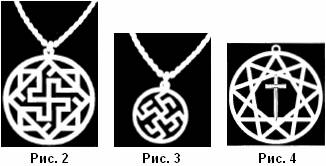
Figs. 2–4. Amulets and protective symbols.
According to Yngliing beliefs, each personal amulet symbolically connects its wearer with the spiritual origins of the Ancient Faith, the Native Gods, and the Ancestors.
The material itself also carries special significance, since different metals and kinds of wood are traditionally associated with particular natural and spiritual qualities.
Silver and Runic Amulets
Most metal amulets are traditionally made of silver, which Old Believer–Ynglings regard as a sacred metal.
In the tradition's spiritual symbolism, silver represents purity and protection, while silver amulets serve as signs of spiritual guardianship.
Runic Amulets have a special place: they bear protective runes, runic inscriptions, or texts of protective incantations. Some are fashioned in the shape of a particular rune.
Amulets made from Sacred Trees are likewise revered as bearers of natural power. According to the teachings, each has distinctive spiritual qualities associated with its wood and symbolic meaning.
Pectoral Amulets
In addition to personal ancestral or community amulets, priests, elders, and community leaders wear special pectoral protective symbols.
“Pectoral” means worn on the chest. These symbols are displayed over ceremonial or sacred clothing and serve as distinctive signs of spiritual service.
Amulet Sizes
Traditional descriptions give amulet sizes using the Pyad system of measurement.
Personal amulets:
-
Minimum: one Nokot (1.11125 cm).
-
Maximum: one Vershok (4.445 cm).
Pectoral amulets:
-
From 1½ Vershoks (6.6675 cm).
-
To 2¼ Vershoks (approximately 10 cm).
These measurements are given according to the tradition's Pyad system.
Symbol of the Ancient Faith
The Star of Ynglia
The principal symbol of the Ancient Faith of the Forebears is the Star of Ynglia. According to Yngliing teachings, it represents the Primordial Pure Light—the First Fire of Divine Creation—the radiance of Yarilo the Sun, and the harmonious Human Being, uniting the Physical, Spiritual, and Soul aspects of existence.
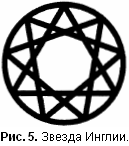
Fig. 5. The Star of Ynglia.
The Three Aspects of the Star of Ynglia
The Star of Ynglia consists of three interwoven triangles enclosed in a circle. Within the spiritual tradition, it has three interconnected interpretations.
1. The Divine Aspect
The three triangles represent one of the Great Triglavs, guardians of the Divine Worlds—Yav, Nav, Slav, and Prav.
The surrounding Circle symbolizes the One Life-Giving Ynglia, while the boundless space beyond it represents the One Creator and Maker, the Great Ra-M-Kha.
2. The Human Aspect
The three triangles signify a Healthy Body, a Strong Spirit, and a Luminous Soul.
The enclosing Circle represents Pure Conscience, while the boundless space beyond it symbolizes the multifaceted Divine World in which human beings live, grow, and create.
3. The Natural Aspect
The three triangles symbolize Earth, Water, and Fire, while the Circle represents Air.
The boundless space beyond the Circle symbolizes Pure Svarga—the Heavens.
Thus, the Star of Ynglia unites the Divine, Human, and Natural aspects of Creation, emphasizing their unity and interconnectedness.
Additional Symbols Within the Star of Ynglia
Other sacred symbols may be placed at the center of the Star of Ynglia, adding further spiritual meanings.
The Sword
A sword pointing downward symbolizes the preservation of Ancient Wisdom and the transmission of spiritual knowledge from generation to generation.
A sword pointing upward signifies the defense of native lands, sacred places, and communities against external and internal threats.
Such symbolism is used in communities preserving ancient knowledge, customs, and ancestral traditions.
Perunitsa
Placed at the center of the Star of Ynglia, Perunitsa symbolizes the protection and patronage of the God Perun.
Amulets featuring Perunitsa are traditionally associated with communities that honor wise Perun, Protector of Slavic Lineages.
Vestnik (Mati-Gotka)
The Star of Ynglia bearing the central symbol known as Vestnik (“Messenger”) is regarded as an amulet of Happiness, Health, and Joy.
Within the tradition, this symbol is also called Mati-Gotka, interpreted as “Mother of the Goths.”
It is associated with preserving ancestral memory, cultural heritage, and spiritual traditions passed down through generations.
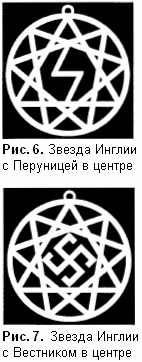
Figs. 6–7. The Star of Ynglia with Perunitsa and Vestnik.
Artakons — Symbols of Spiritual and Natural Power
Besides personal and pectoral amulets, some priests, elders, and community leaders wear special sacred objects called Artakons.
According to Yngliing spiritual beliefs, an Artakon unites two powers of the Living World:
-
The Power of the Rodovich — a revered animal or bird regarded as the Natural Guardian of a lineage.
-
The Power of Sacred Wood — a symbol of natural wisdom, vitality, and spiritual connection with the Ancestors.
An Artakon traditionally consists of a claw from a revered animal or bird and prayer beads made from Sacred Wood.
Figure 8 shows two Artakons:
-
Right: an eagle's claw with beads of Sacred Oak.
-
Left: a bear's claw with beads of Sandalwood.
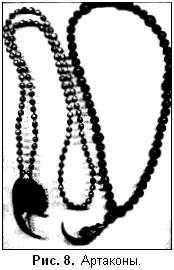
Fig. 8. Artakons.
In this context, a Rodovich is a revered animal or bird symbolizing the natural protection of a particular lineage. The tradition includes eagles, storks (busl), falcons, ravens, owls, foxes, wolves, bears, snow leopards, and others.
Their claws are regarded within the teachings as symbolic bearers of Spiritual and Natural Power.
Bereginya
According to the spiritual legends of the Old Believer–Ynglings, our Ancestors tied their hair back with an embroidered braid, ribbon, or leather cord worn around the forehead, called a Bereginya.
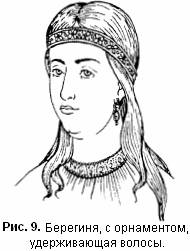
Fig. 9. Bereginya—an ornamented headband used to hold back the hair.
The Bereginya had both practical and protective significance.
In everyday life, it kept hair in place, preventing it from blowing into the eyes and helping keep sweat out of the eyes during work.
According to ancestral beliefs, the Bereginya also protected the mind from confusion and harmful thoughts, and the Soul and Body from the evil eye, curses, and harmful influences.
Thus, the Bereginya combined everyday usefulness with spiritual meaning, serving as a symbol of protection and inner harmony.
Invocations to the Gods and Ancestors
Sacred Places
Honoring the Ancient Luminous Gods, the Heavenly Rod, and the Wise Ancestors holds a special place in the spiritual tradition of the Old Believer–Ynglings.
Invocations, praises, and the kindling of Sacred Ynglia take place in Kummirni, Kapishchas, and Sanctuaries, as well as on the banks of sacred rivers and lakes, in groves and oak woods.
These places are revered as spaces of spiritual unity between people, the Gods, the Ancestors, and Mother Nature.
Daily Invocations
Honoring the Gods and Ancestors is important not only during sacred rites but also in everyday life.
At home, it is customary to remember the Native Gods and Ancestors and offer prayers of gratitude and remembrance:
-
In the morning — upon awakening, to greet the new day.
-
In the evening — before sleep, in gratitude for the day.
-
Before and after meals — to bless food and water.
-
When presenting offerings and gifts — during sacred rites at fire altars, alatars, and places honoring the Ancestors.
-
Before and after constructive work — to seek blessings and give thanks for help in work benefiting the lineage.
In this way, the spiritual bond with the Gods and Ancestors is maintained not only on holidays but throughout everyday life.
Rites and Worship
Old Believer–Ynglings perform sacred rituals, rites, and invocations before Kummirs of the Native Gods—the guardians of lineages and the Wise Ancestors—or before crafted Images depicting them.
On holidays and ordinary days, when free from daily responsibilities, followers traditionally visit Kapishchas and Sanctuaries, take part in worship, listen to the Sacred Word of Divine Wisdom, and pay respect to the Luminous Gods and Ancestors.
Special importance is placed on sincerity, purity of intention, and observance of spiritual teachings.
The Two Great Principles
Two Great Principles form the foundation of the spiritual life of the Old Believer–Ynglings:
Honor your Gods and Ancestors as sacred.
Always live according to Conscience and in harmony with Mother Nature.
These principles express the desire to preserve spiritual bonds with the Ancestors, act according to Conscience, respect the surrounding World, and create for the benefit of future generations.
On Fasting
Meaning and Purpose of Fasting
In the spiritual tradition of the Old Believer–Ynglings, POST (fasting) is understood as a period of physical and spiritual purification, restraint, and preparation for seasonal changes in diet.
The dates of the fasts are determined by the Da'Aryan Krugolet of Chislobog, a calendar system used in Yngliing teachings.
Within the tradition, the old spelling ПОСТЪ is explained as an acronym formed from the first letters of an ancient expression:
-
П — Полное (Complete)
-
О — Очищенiе (Purification)
-
С — Собственныхъ (Of One's Own)
-
Т — Телесъ (Bodies)
-
Ъ — Сотворяша (Accomplishing)
This interpretation is part of the spiritual tradition, not a generally accepted scholarly etymology.
According to Yngliing beliefs, observing the fasts encourages restraint, strengthens self-discipline, and supports a gradual transition between seasonal diets.
Main Fasts of the Old Believer–Ynglings
The tradition recognizes five multi-day fasts and one recurring single-day fast.
1. Holy Fast (Svyatoy Post)
Duration: 9 days (one Slavic nine-day week).
Period: days 22–30 of the month Ramkhat.
During the Holy Fast, followers abstain from meat, fish, fatty and spicy foods, eggs, butter, and dairy products.
The diet is based on vegetables, fruit, berries, grains, and legumes.
According to the traditional description, plant-based food is eaten in the morning and evening, while water, juices, and herbal teas are consumed during the day.
This fast is associated with preparation for the transition to foods suitable for long-term storage.
2. Dazhdbog's Fast (Dazhdbozhiy Post)
Duration: 18 days (two Slavic nine-day weeks).
Period: days 1–18 of the month Beylet.
Dazhdbog's Fast is associated with the transition from early preserved foods to products stored for longer periods, including pickled and smoked foods.
During this fast, followers avoid:
-
Meat and fatty fish.
-
Eggs and white bread.
-
High-fat dairy products, cream, sour cream, and butter.
Vegetable oil is permitted.
Gray and rye breads are allowed, including bread made with a traditionally prepared overnight starter.
The rest of the diet largely follows the Holy Fast. Sauerkraut or buckwheat porridge is traditionally recommended during the day.
3. Pure Fast (Chisty Post)
Duration: 18 days (two Slavic nine-day weeks).
Period: days 22–39 of the month Geylet.
During the Pure Fast, meat, eggs, fatty and fermented foods, and both animal and vegetable oils are excluded.
Permitted foods include:
-
Lean fish prepared without frying.
-
Steamed grain porridges.
-
Pasta, gray bread, and rye bread.
-
Nuts, berries, juices, and herbal teas.
-
Small quantities of legumes.
Fresh plant foods, including green onions and radishes, are gradually introduced during the second week.
4. Great Fast (Veliky Post)
Duration: 13 days (approximately one and a half Slavic nine-day weeks).
Period: days 22–34 of the month Daylet.
The Great Fast emphasizes moderation and limiting fatty foods.
Fatty meats, fatty fish, butter, cream, and sour cream are avoided.
Lean dishes, including chicken and rabbit meat, as well as vegetable oil, are permitted.
5. Bright Fast (Svetly Post)
Duration: 18 days (two Slavic nine-day weeks).
Period: from day 33 of the month Veylet through day 9 of the month Kheylet.
During the Bright Fast, the tradition prescribes eating only plant-based food in the morning and evening.
A special exception is made for the Sacred Day of the God Kupala, which falls during this fasting period.
On this festive day, meat may be eaten if it is cooked over Living Fire—a bonfire kindled from sacred fire according to ritual tradition.
6. One-Day Fast
Period: every seventh day of the Slavic nine-day week.
According to the Commandment of Svarog:
“Honor three days of the week—the third, seventh, and ninth...”
On the seventh day, the tradition prescribes abstaining from food while allowing water, juices, herbal teas, strained fruit compotes, and kissel (a traditional thickened drink).
If the One-Day Fast coincides with a sacred holiday, the fast is not observed and the day is dedicated to celebration.
Exemptions from Fasting
According to traditional prescriptions, the following are exempt from fasting:
-
Children under 12 years of age.
-
Pregnant and breastfeeding women.
-
People over 60 years of age.
-
Warriors performing guard duty.
-
Injured, ill, or weakened people.
These exemptions recognize the need for adequate nutrition, strength, and good health.
Fasting and Health
Fasting is regarded within the spiritual tradition as a form of restraint and self-discipline. However, strict dietary restrictions and prolonged periods without adequate food are not appropriate for everyone.
Fasting should not harm one's health. People with chronic medical conditions, those taking medication, those performing strenuous physical activity, or those with special nutritional needs should discuss dietary restrictions with a qualified healthcare professional.
The spiritual meaning of fasting lies not only in changing one's diet but also in mindfulness, moderation, purity of thought, and respect for one's body.
The Yngliing Understanding of Life
“You cannot understand life through another person's mind, nor become wiser by doing so...”
— Volkhv Velimudr
Foundations of the Spiritual Worldview
Within the spiritual tradition of the Old Believer–Ynglings, Yngliism is regarded as the Ancient Faith of the Forebears, associated with honoring the Luminous Gods, the Wise Ancestors, and the Life-Giving Light of Yarilo the Sun.
At the heart of this worldview are Conscience, constructive work, respect for one's lineage, reverence for the Ancestors, and life in harmony with Mother Nature.
According to the teachings, a person's spiritual path cannot be separated from everyday Life. Faith is expressed not only through sacred rites and invocations but, above all, through actions, relationships with the surrounding World, and responsibility for one's deeds.
Faith and Connection with the Ancestors
For Old Believer–Ynglings, the Faith of the Forebears is more than a collection of rituals and rules. It is a spiritual connection with one's lineage, its history, Wisdom, and traditions.
Just as a tree draws nourishment from its roots, a person draws spiritual strength from the memory of the Ancestors, knowledge of their culture, and respect for the heritage of earlier generations.
Preserving ancestral memory does not mean refusing to learn about other cultures and worldviews. On the contrary, studying the spiritual heritage of different peoples can broaden one's understanding of the World and deepen awareness of one's own traditions.
Every person determines their own spiritual path, guided by Conscience, reason, and personal conviction.
The Meaning of Life
The Great Purpose of Human Life is Life itself.
According to the Yngliing spiritual worldview, a person enters the World of Yav not for suffering and destruction, but for knowledge, creation, spiritual growth, and the continuation of their lineage.
Life should be lived fully—with joys and trials—gaining Wisdom, developing abilities, and performing good deeds.
A person is called to work and create for the benefit of family, lineage, people, and future generations, while respecting the surrounding World.
Spiritual growth does not mean rejecting earthly Life, but striving to make it meaningful, worthy, and harmonious.
Humanity and Mother Nature
In the spiritual worldview of Yngliism, Nature is understood as a unified, diverse, and spiritually animated World.
Yarilo the Sun, Mother Moist Earth, Water, Air, Fire, trees, grasses, stones, and clouds are seen as manifestations of the great Creation.
Human beings do not exist apart from Nature. They are an inseparable part of it and bear responsibility for preserving the surrounding World.
By appreciating Nature's beauty and diversity, people learn to live in accordance with its laws, respect Life in all its forms, and avoid destroying what has been entrusted to them for constructive purposes.
Conscience and Responsibility
One of the main spiritual principles of Yngliism is personal responsibility for one's actions.
A person should not shift responsibility for decisions or mistakes onto the Gods, spiritual forces, or circumstances. Each person has freedom of Will and chooses between creation and destruction.
Conscience is the foremost inner law by which a person should guide their deeds.
According to the teachings, people answer for their actions before their own Conscience, the Native Gods, and the Wise Ancestors.
Honoring the Gods does not free anyone from responsibility; instead, it encourages the pursuit of Wisdom, justice, and spiritual improvement.
Life and Death in Creation
In the spiritual worldview of the Old Believer–Ynglings, Life and Death are seen as interconnected aspects of a single Existence.
Human Life is not understood as limited to the World of Yav. According to the teachings, Creation also includes the Worlds of Nav, Slav, and Prav, associated with different states and manifestations of existence.
Death is perceived not only as the end of earthly life but also as part of the great cycle of Being.
By contemplating the relationship between Life and Death, a person seeks to understand their place in the Universe and the deeper meaning of existence.
Life is given to human beings so that they may know themselves as part of the Universe, and the Universe as part of themselves.
Ancient Wisdom and Spiritual Growth
The study of sacred texts, legends, Images, and symbols occupies an important place in Yngliing spiritual life. Through them, the Wisdom of the Gods and Ancestors is understood to be transmitted.
Texts revered within the tradition include the Slavic-Aryan Vedas, Santii, sagas, Eddas, Kharatii, and others regarded by followers as sources of spiritual knowledge.
Studying these sources is intended to develop symbolic thinking, independent judgment, curiosity, and the ability to apply knowledge thoughtfully in everyday Life.
Spiritual Wisdom, however, is expressed not only in knowledge of sacred texts but also in constructive work, kind deeds, respect for elders, care for the young, and preservation of ancestral traditions.
Preserving Faith and Ancestral Culture
Every lineage and every people possesses its own cultural heritage, history, customs, and spiritual traditions.
Old Believer–Ynglings attach special importance to preserving their distinctive culture, the Ancient Faith of the Forebears, and the Wisdom passed down through generations.
Preserving traditions means studying them, reflecting on their meaning, and passing them to descendants, while respecting the spiritual heritage of other peoples.
A person who lives according to Conscience strives to create for the benefit of their lineage, people, and homeland; protect loved ones; preserve cultural heritage; and take responsibility for future generations.
For true devotion to Faith is expressed not merely in words, but in a worthy Life, good deeds, and fidelity to one's Conscience.
Solar Symbols
Origins and Meanings
Solar symbols hold a special place in the spiritual tradition of the Old Believer–Ynglings. They include cross-shaped signs with bent arms pointing clockwise or counterclockwise, as well as a variety of geometric ornaments.
Similar symbols are known from the cultures of many peoples across Eurasia and other regions. They appear on household objects, jewelry, textiles, and architectural elements.
In different cultural traditions, these signs have carried different meanings associated with the Sun, Fire, movement, well-being, and ideas about Creation.
In Yngliing teachings, individual solar signs are assigned distinct names, symbolic meanings, and protective qualities.
The historical meanings of ancient symbols should be distinguished from their modern religious interpretations. In the twentieth century, the swastika also became a symbol of Nazism, so its use requires an awareness of historical and cultural context.
Protective Ornamental Patterns
Solar symbols can be used individually or combined with other geometric signs to form an Oberegovaya Vyaz—an interwoven protective ornament with both decorative and spiritual meaning.
According to Yngliing tradition, each element of such a pattern carries a particular symbolic Image and connects a person with the Native Gods, the Ancestors, and Mother Nature.
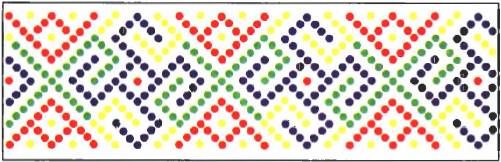
Fig. 1. Protective ornamental pattern.
The ornament shown combines several symbols:
-
Prirodny Slavets (green) — a symbol of Health and vitality.
-
Nebesny Blagovest (blue) — a symbol of the protection of the Native Gods.
-
Stars (gold) — symbols of a favorable Destiny.
-
Spiritual Power (red) — a symbol of diligence and inner resilience.
Such ornaments traditionally decorate women's shirts, especially their collars and sleeves.
Solar Ornament on the Belt of a Priest of Perun
In the spiritual tradition of the Old Believer–Ynglings, particular importance is given to an interwoven ornament combining the Fiery Images of Kolovrat and Perun's Flower.
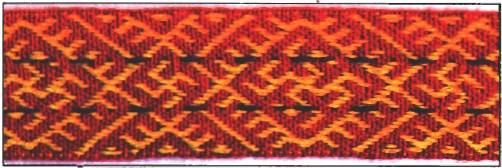
Fig. 2. Fragment of a man's belt worn by a priest of the God Perun.
According to the teachings, this pattern symbolizes the revival of the Heavenly Laws of the Lineage and the awakening of a person's inner Soul and Spiritual powers.
Two intersecting Heavenly threads represent the connection between a person, their lineage, the Native Gods, and the spiritual heritage of the Ancestors.
The ornament serves as a reminder to live in harmony with one's Soul, Spirit, Conscience, and the surrounding Mother Nature.
Solar Symbols in Everyday Life
Solar and protective ornaments are used not only on sacred objects but also to decorate clothing, dishes, and household utensils.
In Yngliing tradition, these images are regarded as bearers of spiritual meanings, expressing ideas about Creation and humanity's place within it.
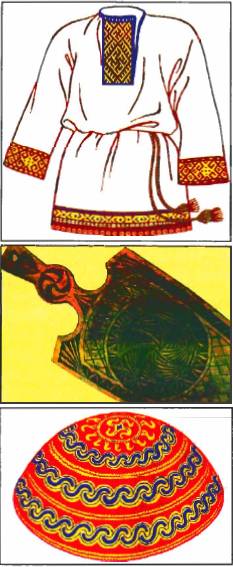
Fig. 3. A shirt, cutting board, and bowl decorated with ornaments.
Kosovorotka shirt. Embroidered patterns symbolize a person's spiritual connection with the Native Gods, Ancestors, and Mother Nature.
Cutting board. Followers interpret its symbols as representations of the sixteen Halls of the Circle of Svarog through which Yarilo the Sun passes.
Bowl. Its ornaments are associated with the many-sided nature of the World of Yav, the spiritual kinship of humanity with the Gods and Ancestors, and the unity of Creation.
According to the teachings, the Divine Light of Ynglia fills not only Midgard-Earth but also countless Worlds and Universes.
Passing Wisdom to Future Generations
An important part of Yngliing spiritual tradition is passing on knowledge of sacred symbols, ancestral customs, and the principles of constructive Life.
Learning about the surrounding World begins in childhood, through stories, legends, and teachings shared by parents and grandparents.
By studying ancient Images, ornaments, and sacred texts, a person becomes acquainted with the spiritual heritage of their lineage and learns to understand the symbolic language of the tradition.
Special importance is placed on the example set by older generations, constructive work, living according to Conscience, and respect for Mother Nature.
Preserving spiritual heritage means not only knowing ancient symbols, but also passing Wisdom, good customs, and the desire to create on to future generations.
The Nine Foundations of Yngliism
In the spiritual tradition of the Old Believer–Ynglings, the Nine Great Foundations of Faith occupy a special place as moral and spiritual guides.
According to the teachings, these Foundations guide the development of the Soul, Spirit, and creative abilities, helping people live according to Conscience, preserve their bond with the Native Gods and Ancestors, and seek harmony with the surrounding World.
1. Enlightenment through Knowledge
The First Foundation calls upon people to study sacred writings, legends, the Wisdom of their Ancestors, and the spiritual heritage of other peoples.
Knowledge should serve not only intellectual growth but also good deeds performed in honor of the Gods and Ancestors.
2. Spirituality
The Second Foundation affirms the need for continual Spiritual growth.
A person should seek self-knowledge, strengthen the qualities of the Soul, and introduce others to spiritual values through personal example.
3. Compassion
The Third Foundation teaches compassion toward all living beings created by the Gods.
It calls for mercy, care for others, and a respectful attitude toward Mother Nature.
4. Inner Peace (Pokoyanie)
The Fourth Foundation concerns finding inner peace through harmony of Body, Soul, and Spirit.
According to the teachings, a person attains inner balance when thoughts, words, and deeds agree with Conscience.
5. Patience
The Fifth Foundation teaches understanding toward the actions and beliefs of other people.
Every person possesses freedom of Will, but that freedom must not violate the freedom or dignity of others.
Patience involves respect, self-control, and awareness of responsibility toward one's lineage, society, and the Native Gods.
6. Peacefulness
The Sixth Foundation calls for peace and good relations among individuals and peoples.
Peacefulness does not mean refusing to protect loved ones, one's lineage, or homeland against a genuine threat.
Such protection should nevertheless be guided by Conscience, necessity, and the desire to preserve Life—not hatred or a wish to destroy.
7. Love for One's Neighbor
The Seventh Foundation affirms the importance of love, kindness, and respect toward all living beings.
It includes care for family and neighbors, reverence for the Ancestors, and respect for the history and spiritual heritage of different lineages and peoples.
8. Trials
The Eighth Foundation regards life's trials as opportunities for Spiritual growth.
By overcoming difficulties, people strengthen their Will, develop patience, and gain Wisdom.
According to the teachings, the path of spiritual growth is connected with striving toward Heavenly Vyriy and Heavenly Asgard.
9. Purposefulness
The Ninth Foundation teaches that every Life has meaning, a calling, and a purpose.
A person should seek to develop their abilities, discover their calling, and direct their efforts toward constructive deeds.
Purposefulness involves commitment to one's chosen path, diligence, and continual Spiritual development.
Unity of the Nine Foundations
The Nine Foundations of Yngliism form a unified system of spiritual and moral principles.
They call upon people to seek Wisdom, live according to Conscience, show compassion, respect the freedom of others, preserve peace, and work for the good of their lineage, people, and the surrounding World.
Following the Nine Foundations is understood within the tradition as a path of growth of the Soul and Spirit, harmony with Mother Nature, and reverence for the Luminous Gods and Wise Ancestors.